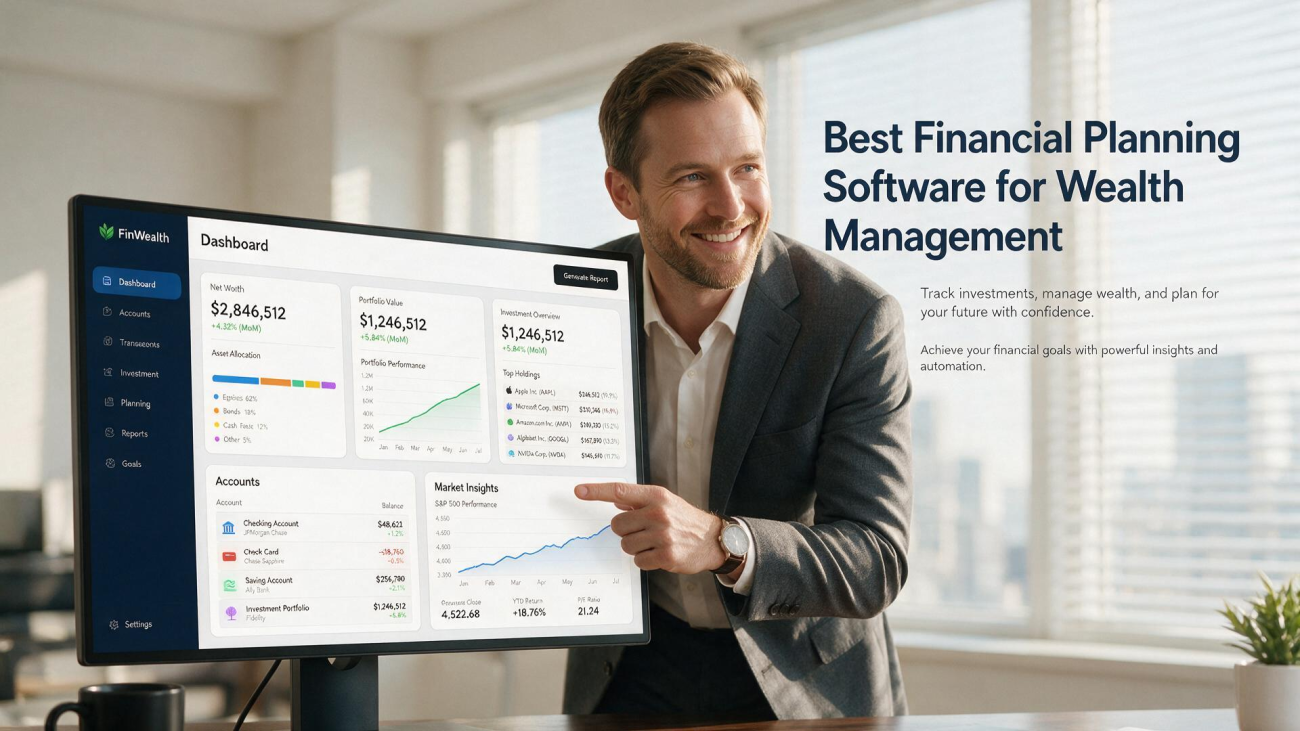
Anyone who has tried to manage serious money with a patchwork of spreadsheets, bank portals, and half-forgotten logins knows the pain. You can be brilliant at your job, disciplined about saving, and still find
yourself fumbling every March when it's time to figure out what actually happened to your portfolio last year. That's the gap financial planning software is supposed to close, and when it's chosen well, it genuinely does. The problem is that the market is crowded, the marketing is loud, and a lot of tools look nearly identical on the surface. Picking the right one takes more than a quick demo.What Actually Separates Good Software From the Rest
Before you start comparing brands, it helps to understand what these platforms are really being asked to do. The best financial planning software doesn't just track balances.
It connects the dots between today's decisions and tomorrow's outcomes—retirement dates, tax brackets, college funding, estate plans, the whole picture. A tool that shows you a pretty pie chart of your holdings but can't tell you whether you can afford to retire at sixty-two is a toy, not a planning platform. The distinction sounds obvious, but plenty of buyers get seduced by dashboards and forget to ask the hard questions.The second thing to look for is data connectivity. Your money lives in a dozen places: brokerage accounts, 401(k)s, IRAs, bank accounts, maybe a rental property or a small business interest. A platform that can't reliably pull all of that into one view is going to force you back into manual entry, and manual entry is where good intentions go to die. The best tools aggregate accounts automatically, refresh daily, and handle the messy edge cases—like a 401(k) with an obscure custodian or a pension with a complicated vesting schedule. When aggregation breaks, the whole planning exercise loses credibility.
Then there's the matter of reporting. A good platform doesn't just show you numbers; it tells you what the numbers mean. Performance attribution, fee analysis, tax lot detail, projected income in retirement—these aren't nice-to-haves. They're the difference between a tool that informs decisions and one that just decorates them. If you're paying for wealth management software, you should be getting reporting that a CPA or advisor would actually respect, not just charts that look good on a phone screen.
Security deserves a mention too, and not just as boilerplate. You're handing over credentials to your entire financial life. Read the fine print on encryption, two-factor authentication, and data-sharing agreements. Any platform that treats security as an afterthought isn't ready for prime time, no matter how slick the interface looks.
Where Investment Tracking Software Earns Its Keep
Let's talk about the piece most people underestimate: tracking investments across accounts and time. A single brokerage statement is easy to read. Ten of them, from different custodians, with different reporting conventions, is a mess. Good investment tracking software solves that mess. It consolidates positions, calculates true cost basis, tracks dividends and distributions, and shows you what you actually own versus what you think you own. That last part matters more than people realize—drift happens quietly, and by the time you notice, your allocation may be nothing like what you intended.
The best platforms go further and handle performance measurement properly. That means time-weighted returns, not just dollar gains, so you can compare your results against a benchmark without getting fooled by cash flows. It means breaking out asset allocation at the right level, drilling into sector exposure, and flagging concentration risk before it becomes a problem. It means tracking fees across every account so you know what you're actually paying, not what you were quoted when you opened the account. These are the details that separate serious tracking from casual monitoring.
Tax lot management is another area where the good tools pull ahead. If you're doing any kind of tax-aware selling, you need to see lots individually, know which ones are long-term versus short-term, and model the tax impact before you place a trade. Software that lumps everything into an average cost basis is leaving money on the table for anyone in a higher bracket. This is where portfolio management software starts to look less like a luxury and more like a necessity for households with significant taxable assets.
One more thing worth flagging: mobile experience. You don't need to do deep analysis on your phone, but you do need to be able to check balances, review alerts, and approve trades without booting up a laptop. Tools that treat mobile as an afterthought tend to feel stale fast, and stale tools get abandoned. Pick something you'll actually use on the device you actually carry.
The Planning Features That Matter Most
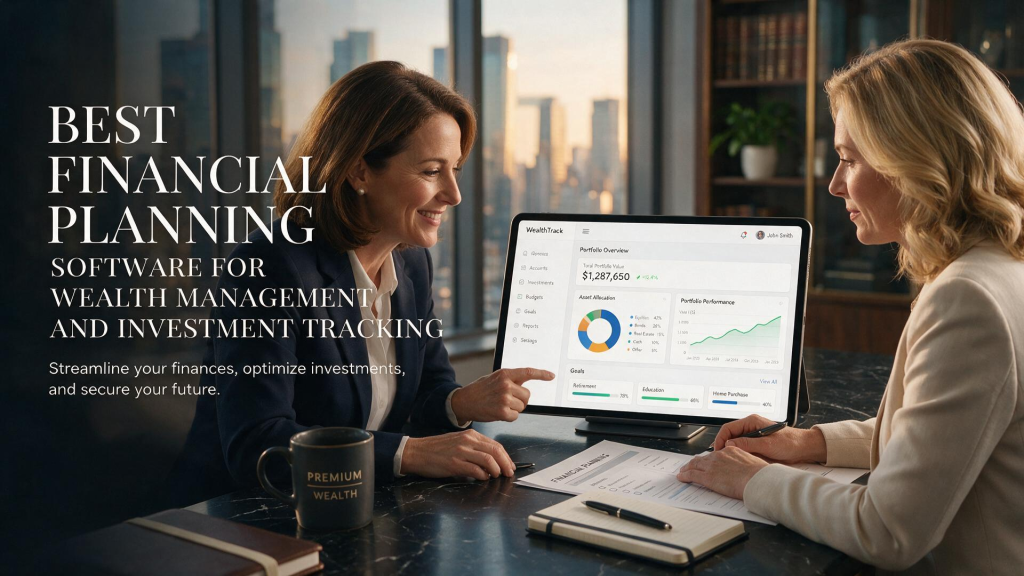
Here's where a lot of platforms fall down. They're excellent at showing you what you have and terrible at telling you what to do next. The financial planning tools that earn their subscription price are the ones that model real decisions. Can you afford to retire two years early if markets return six percent instead of eight? What happens to your plan if you sell the rental property and reinvest the proceeds? How does a Roth conversion this year affect your tax picture five years out? If a tool can't run those scenarios, it's a tracker, not a planner.
Retirement projections are the core of this, and the quality varies enormously. Some platforms assume a single return rate and call it a day. Better ones model sequences of returns, account for inflation, factor in Social Security timing, and let you stress-test against a bad decade. That nuance matters because retirement outcomes are driven less by average returns than by the order in which they arrive. A tool that ignores sequence risk is quietly telling you a comfortable story that may not hold up.
Tax planning deserves its own spotlight. The best platforms let you model Roth conversions, track bracket thresholds, estimate capital gains exposure, and plan charitable giving around your income. Some go further and integrate with your actual tax return, which is a huge time-saver at year-end. For anyone with a complex financial life—multiple income streams, business ownership, inherited accounts—this feature set can pay for itself several times over in avoided mistakes alone.
Estate and legacy planning is the final frontier. Few tools handle it well, but the ones that do let you see how your assets would pass to heirs, model gifting strategies, and flag potential estate tax exposure. Even a basic version of this is valuable, because most people dramatically underestimate how much of their estate the government might eventually claim. A platform that shows you the number, even roughly, changes the conversation.
Matching the Tool to the User
There's no single winner here, because the right choice depends heavily on who you are. A do-it-yourself investor with a few brokerage accounts has different needs than a family office managing nine figures across dozens of entities. Matching the tool to the user is more important than chasing the flashiest feature list.
For individual investors and households, the sweet spot is usually a platform that combines solid aggregation with genuine planning capability and a reasonable price. You want something that pulls everything into one view, runs retirement and tax scenarios, and doesn't require a finance degree to operate. Many of the consumer-facing platforms have gotten remarkably good at this, and the gap between them and professional-grade software has narrowed considerably. The trade-off is usually depth—consumer tools tend to be strong on the big picture and lighter on the granular analysis that a professional advisor would want.
For advisors and wealth managers, the calculus changes. You need multi-client support, compliance-friendly reporting, fee billing integration, rebalancing tools, and the ability to produce client-ready documents without rebuilding everything from scratch. The best financial planning software for a solo advisor is rarely the same as what a large RIA needs, and the pricing structures reflect that. Spend time on demos, ask about data migration, and don't sign a long contract until you've run a real client scenario through the system.
For high-net-worth families managing their own affairs, the priority often shifts toward portfolio management software with serious analytical chops, plus planning tools that can handle trusts, partnerships, and multiple entities. This is where the professional-grade platforms shine, but they come with a learning curve and a price tag to match. The right move is usually to pair the software with a good advisor who knows how to use it, rather than trying to become an expert in the tool yourself.
Common Mistakes Buyers Make
The first mistake is buying on price alone. Cheap software that doesn't actually solve your problem is expensive in the long run, because you end up paying for it and still doing the work manually. The second is buying too much software. A platform designed for a family office will overwhelm someone with three accounts, and the unused features just add noise. Match the complexity of the tool to the complexity of your life.
Another common error is ignoring the data migration question. Switching platforms is painful, and the pain is worse if the new system can't cleanly import your history. Ask about onboarding support before you commit. Find out how long it takes, who does the work, and what happens if the import breaks halfway through. A vendor that waves off these concerns is telling you something about how the rest of the relationship will go.
Finally, don't overlook the human side. Software is a tool, not a substitute for judgment. A great wealth management software platform can surface the right questions and model the right scenarios, but someone still has to decide what to do with the answers. The families who get the most out of these tools are the ones who use them to have better conversations with their advisors, not the ones who expect the software to do the thinking for them.
Making the Final Call
When you're down to two or three candidates, run a real test. Import a year of actual data, run a scenario you care about, and see how long it takes to get a useful answer. Check how the platform handles an edge case—a stock split, a merger, a partial account transfer—because that's where weak systems fall apart. Then step back and ask whether the tool made you feel more confident about your financial decisions or just more informed about your balances. That's the real test.
The right platform should feel like it's working for you, not the other way around. It should reduce the time you spend gathering information and increase the time you spend thinking about what to do with it. It should be a financial planning tools investment that pays for itself in better decisions, not just in prettier reports. Get that right, and the software fades into the background where it belongs, doing its job quietly while you get on with the business of building and protecting your wealth.
