The Risks You Can See and the Ones You Can't
Every business owner thinks about risk. They worry about the economy, about competitors, about a key employee leaving, about a lawsuit or a fire. But thinking about risk
and managing it are different things. Most businesses manage risk reactively, buying insurance after a loss or scrambling to respond when something goes wrong. The businesses that survive and thrive over the long run manage risk proactively, identifying the threats before they materialize and building systems to reduce their likelihood and impact. That's what business risk management is about, and for growing companies, it's as important as any other part of the operation.The problem is that risk management is often seen as a cost center, something that's nice to have but not essential. That view is understandable, but it's also dangerous. A single unmanaged risk can wipe
out years of profit, damage the company's reputation, or force it to close. The businesses that take risk management seriously aren't paranoid. They're realistic. They understand that the future is uncertain, and they want to be prepared for the range of outcomes rather than just the ones they hope for. The enterprise risk management approach that works is comprehensive and integrated, not a collection of disconnected insurance policies and compliance checklists.What makes this particularly important right now is that the risk landscape is more complex than it used to be. Businesses face not just the traditional risks—fire, theft, liability, economic cycles—but also cyber threats, supply chain disruptions, regulatory changes, climate-related events, and geopolitical uncertainty. The corporate risk assessment that works for a modern business addresses all of those categories, not just the ones that are easy to insure. The goal isn't to eliminate risk—that's impossible—but to understand it, prioritize it, and manage it in a way that supports the business's objectives.
Identifying the Risks That Actually Matter
The first step in any risk management strategy is identifying the risks the business faces. That sounds obvious, but most businesses do it incompletely. They focus on the risks they've experienced before, or the ones that are easiest to insure, and they miss the ones that could be catastrophic but haven't happened yet. A comprehensive risk assessment looks at all four categories of risk: strategic, operational, financial, and compliance .
Strategic risks are the ones that affect the business's ability to achieve its goals. They include competition, changes in customer preferences, technology disruption, and economic conditions. Operational risks are the ones that affect the day-to-day operations, including supply chain failures, equipment breakdowns, employee errors, and cyber incidents. Financial risks include cash flow problems, credit risk, interest rate changes, and currency fluctuations. Compliance risks include regulatory changes, legal liabilities, and reputational damage. The commercial risk management strategies that work address all four categories, because a threat in any one of them can derail the business.
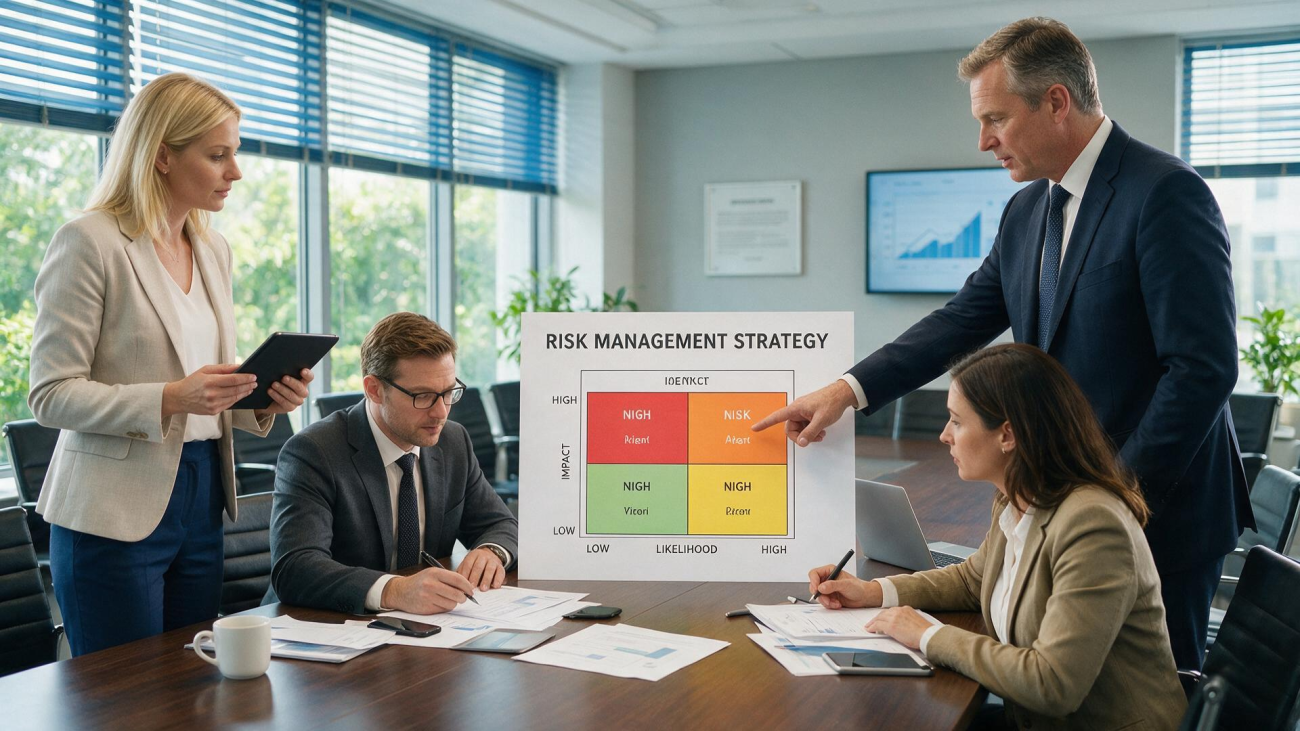
The assessment should be structured and systematic. One common approach is a risk register, which lists each risk, its likelihood, its potential impact, and the controls in place to manage it. The register should be reviewed regularly and updated as the business changes. It should also be prioritized, because not all risks are equally important. A high-likelihood, high-impact risk deserves more attention than a low-likelihood, low-impact one. The business risk mitigation that works focuses resources on the risks that matter most, rather than spreading them thinly across every possible threat.
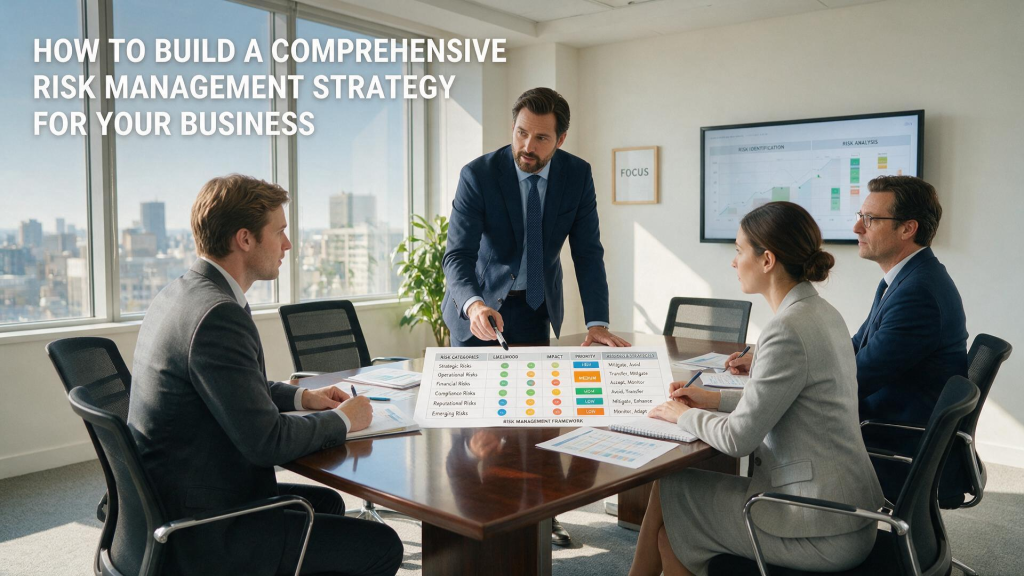
It's also worth involving the whole organization in the risk assessment. The people closest to the work often see risks that management doesn't. An employee in the warehouse might know about a supply chain vulnerability that isn't on the executives' radar. A customer service representative might hear complaints that signal a coming product problem. The business risk management that's comprehensive includes input from across the organization, not just from the top.
Mitigating Risk Through Controls and Insurance
Once the risks are identified and prioritized, the next step is to decide how to manage them. There are four basic approaches: avoid, reduce, transfer, and accept. Avoiding a risk means not engaging in the activity that creates it. Reducing a risk means implementing controls that lower the likelihood or impact. Transferring a risk means shifting it to someone else, usually through insurance or contracts. Accepting a risk means acknowledging it and deciding to live with it, usually because the cost of managing it exceeds the potential loss.
Most risks are managed through a combination of those approaches. A business might reduce the risk of a cyberattack by implementing multi-factor authentication and employee training, transfer the remaining risk through cyber insurance, and accept a portion of the risk through a deductible. The business risk mitigation that works is layered, with multiple controls addressing the same risk from different angles. A single control is rarely sufficient on its own.
Insurance is the most visible form of risk transfer, and it's essential for the risks that are too large for the business to absorb. General liability, property, workers' comp, cyber, and D&O insurance all transfer specific risks to an insurer in exchange for a premium. But insurance isn't a substitute for risk reduction. A business that relies on insurance alone is paying for the losses it could have prevented. The commercial risk management strategies that work use insurance as part of a broader strategy, not as the whole strategy.
Contracts are another form of risk transfer. Indemnification clauses, limitation of liability provisions, and insurance requirements in contracts can shift risk to the other party or require them to carry insurance that covers your exposure. Those provisions are often overlooked, but they can be valuable tools for managing risk. The enterprise risk management approach that works includes a review of contracts and the risk allocation they create, not just a review of the insurance policies.
Building a Culture of Risk Awareness
The most sophisticated risk management strategy will fail if the people in the organization don't follow it. That's why the most effective risk management programs are built on a culture of risk awareness, where employees at every level understand the risks the business faces and their role in managing them. A culture of risk awareness isn't about fear. It's about attentiveness, accountability, and a willingness to speak up when something seems wrong.
Building that culture starts with leadership. When the CEO and the board take risk management seriously, the rest of the organization follows. That means allocating resources to risk management, discussing risks in meetings, and celebrating the identification of problems rather than punishing the people who raise them. The corporate risk assessment that's meaningful is the one that's supported by leadership and integrated into the business's decision-making, not a document that's filed away and forgotten.
Training is another component. Employees need to understand the risks that are relevant to their roles and the controls that are in place to manage them. A warehouse worker needs to know the safety protocols and the procedures for reporting hazards. An office worker needs to know how to recognize a phishing email and what to do if they suspect a data breach. A manager needs to know how to identify and escalate risks. The business risk management that works includes regular training that's tailored to the audience, not a generic compliance module that everyone clicks through without reading.
Communication is the third component. Risk information should flow up and down the organization, not just from the top down. Employees should feel comfortable reporting risks and near-misses, and management should communicate the decisions that are made in response. A business where people are afraid to report problems is a business that's vulnerable to the problems it doesn't know about. The business risk mitigation that works is built on open communication and a culture where risk awareness is everyone's responsibility.
Reviewing and Updating the Strategy
Risk management isn't a one-time exercise. The risks a business faces change as the business grows, as the market changes, and as new threats emerge. A strategy that was adequate five years ago may be inadequate today. The enterprise risk management approach that works includes regular reviews and updates, not just an annual assessment that's repeated without change.
The review should consider changes in the business's operations, its industry, its regulatory environment, and the broader risk landscape. New technologies create new risks. New regulations create new compliance obligations. New competitors create new strategic threats. The commercial risk management strategies that are effective adapt to those changes, rather than assuming that the risks of the past are the risks of the future.
It's also worth benchmarking against peers and industry best practices. What are other businesses in your industry doing to manage risk? What are the emerging risks that are getting attention from regulators, insurers, and industry groups? The corporate risk assessment that's informed by external sources is more robust than one that's based only on internal knowledge.
Finally, the strategy should be integrated into the business's overall planning. Risk management isn't a separate function that sits off to the side. It's part of how the business makes decisions, allocates resources, and plans for the future. The business risk management that works is embedded in the business's strategy, not bolted on as an afterthought. When risk management is integrated into decision-making, the business is better prepared for the uncertainties it faces, and better positioned to take advantage of the opportunities that come with them.
